
High-Performance Butterfly Valves with Triple Offset and Zero Leakage
For a long time, butterfly valves were seen by many engineers as somewhat of a "tool."
The advantages were obvious: cheap, lightweight, simple structure, and easy installation.
The disadvantages were equally obvious: they could only use soft rubber seals, were not resistant to high temperatures and pressures, and would eventually fail to close tightly after prolonged use.
When operating conditions became more demanding—high-temperature steam, high pressure differentials, frequent opening and closing—the bulky and expensive globe valve always took center stage.
Until the advent of the triple offset butterfly valve (TOV).
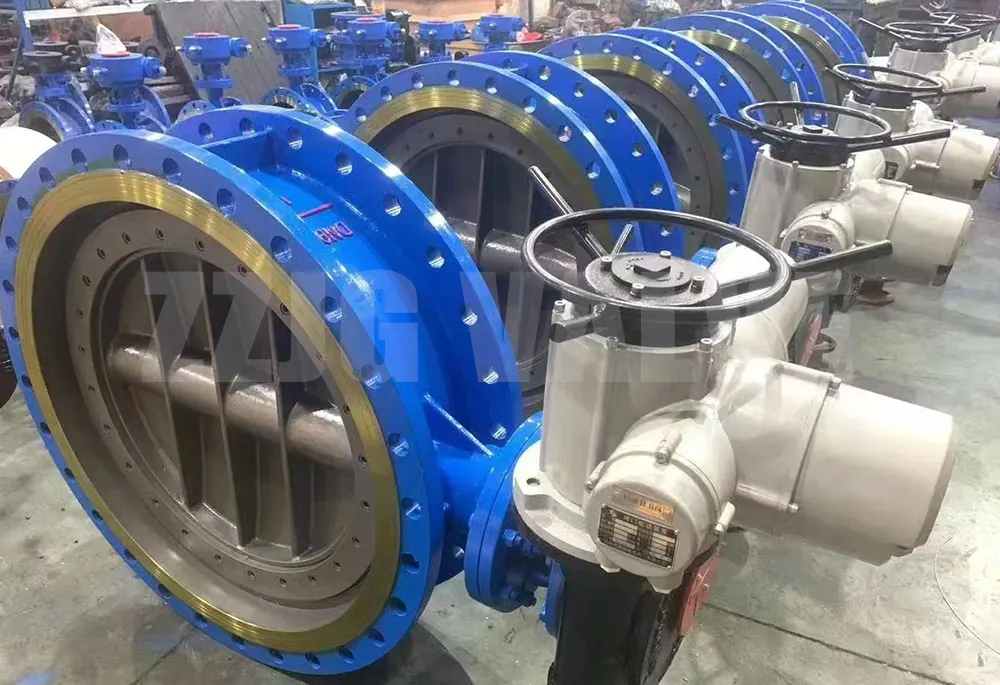
It didn't rely on simply "stacking" materials for performance; instead, it underwent a complete upgrade through its geometry. Through three carefully designed "eccentricities," it solved the friction problem between metal seals, achieving true zero leakage through a hard metal seal.
This time, the butterfly valve was no longer just an "economical alternative," but a high-performance contender capable of directly competing with globe valves.
Let's break it down step by step.
01 The Fatal Weakness of Traditional Butterfly Valves: Friction
To understand how powerful triple offset valves are, we need to look at where the predecessors got stuck.
(1) Concentric Butterfly Valve
The most basic structure: The valve shaft center, valve plate center, and sealing center are completely aligned.
The problem is straightforward—the valve plate is constantly rubbing against the valve seat throughout the entire opening and closing process.
To achieve a seal, the rubber seat must be compressed and deformed.
But what is rubber afraid of?
* High temperatures
* Aging
* Time
Therefore, the root cause of many butterfly valves "not closing tightly" lies here.
(2) Double Offset Butterfly Valve
Engineers were not satisfied, so they made two structural adjustments.
**Eccentricity 1:** The valve shaft is moved backward from the center of the sealing surface.
**Eccentricity 2:** The valve shaft is moved away from the center line of the pipeline. This creates a "cam effect" when the valve opens.
The valve plate quickly disengages from the valve seat after only a few degrees of rotation, significantly reducing friction.
This step is crucial—it allows for the use of harder materials like PTFE, improving both temperature and pressure resistance.
However, the problem isn't completely solved.
At the moment the valve is almost fully closed, there is still some sliding between the metal parts.
To achieve a true metal-to-metal seal, this sliding will cause severe galling, eventually leading to jamming and leaks.
Double eccentricity is good, but it's still missing the "final push."
02 Triple Eccentricity: The True Geometric Magic
The third eccentricity is the core.
The first two eccentricities address "reducing friction,"
the third eccentricity addresses "eliminating friction altogether."
Eccentricity One: Valve Shaft Offset from the Center of the Sealing Surface
The valve shaft does not pass through the center plane of the sealing surface, but moves backward.
Eccentricity Two: Valve Shaft Offset from Pipeline Centerline
The valve shaft is not centered in the pipe, but offset vertically.
These two eccentricities primarily create a cam effect—rapid disengagement upon opening.
⭐ Eccentricity Three: Conical Angle Eccentricity (The Real Key)
Imagine this briefly.
The sealing surface of a traditional butterfly valve is a cylindrical surface.
However, the sealing surface of a triple-eccentric butterfly valve's seat is part of an "inclined cone."
More importantly—the axis of this cone is not equal to the pipe centerline, but has an angle.
For example: Imagine you've cut a slice of ham at an angle; the angled edge is the sealing surface.
This angle is the third eccentricity.
03 The Moment of Miracle: Frictionless "Torque Seal"
What happens when three eccentricities are superimposed?
Simply put: The valve plate and valve seat barely contact each other during the entire opening and closing process.
There is always a gap between them, from 1° to 90°.
Contact only occurs at the very last moment before complete closure.
It's not a sliding contact,
but rather a "aligned and pressed-on" action.
The result is:
* No sliding
* No friction
* No wear
Since there is no wear, a hard metal seal can be used.
This is the transition from "position seal" to "torque seal".
Traditional Valves: Position Seals
Rely on rubber deformation.
The harder the pressure, the faster the wear.
Triple Offset Valves: Torque Seals
Rely on the rotational torque applied by the actuator.
As the valve approaches closure, the seal ring is pressed against the inclined conical surface.
The greater the torque, the tighter the seal.
It's not based on "squeezing deformation",
but on "geometric self-locking".
This is why it can achieve zero leakage metal-to-metal (ANSI/FCI 70-2 Class VI) and has a very long lifespan.
04 The Main Battlefield of Triple Offset Butterfly Valves
With this design, triple offset butterfly valves have begun to gain a foothold in high-end applications.
✅ 1. Large Diameter + High Temperature and High Pressure
For example, 24-inch, Class 600 steam lines.
If a gate valve is used, it will be huge, incredibly heavy, and expensive.
Switching to a triple offset butterfly valve,
the weight may be only one-third,
the support structure is also much lighter,
it is more cost-effective, while the sealing performance is not inferior.
✅ 2. Frequent On/Off Applications
Because there is no sliding friction,
the on/off life is very long.
It is particularly suitable for systems that require frequent shut-off.
✅ 3. Cryogenic Conditions
In extremely low temperature environments such as liquid nitrogen and LNG,
rubber will long become brittle and crack.
Metal hard seals are more stable.
❌ But it's not a panacea
Keep a calm mind.
While triple-offset butterfly valves can indeed regulate flow, they aren't inherently "precision regulators."
Their characteristics are:
* High pressure recovery coefficient
* High gain at small openings
In applications requiring high pressure differentials and precise control,
cage valves remain more stable and linear.
Therefore, they excel at high-performance shut-off valves,
but are not kings in the field of precision regulation.
Final summary
The success of triple-offset butterfly valves wasn't a material revolution, but a geometric revolution.
It used three seemingly simple offsets to completely solve the friction problem that had plagued butterfly valves for decades.
From "cheap and easy to use,"
to "high-end and reliable."
This is its true comeback.
The advantages were obvious: cheap, lightweight, simple structure, and easy installation.
The disadvantages were equally obvious: they could only use soft rubber seals, were not resistant to high temperatures and pressures, and would eventually fail to close tightly after prolonged use.
When operating conditions became more demanding—high-temperature steam, high pressure differentials, frequent opening and closing—the bulky and expensive globe valve always took center stage.
Until the advent of the triple offset butterfly valve (TOV).
It didn't rely on simply "stacking" materials for performance; instead, it underwent a complete upgrade through its geometry. Through three carefully designed "eccentricities," it solved the friction problem between metal seals, achieving true zero leakage through a hard metal seal.
This time, the butterfly valve was no longer just an "economical alternative," but a high-performance contender capable of directly competing with globe valves.
Let's break it down step by step.
01 The Fatal Weakness of Traditional Butterfly Valves: Friction
To understand how powerful triple offset valves are, we need to look at where the predecessors got stuck.
(1) Concentric Butterfly Valve
The most basic structure: The valve shaft center, valve plate center, and sealing center are completely aligned.
The problem is straightforward—the valve plate is constantly rubbing against the valve seat throughout the entire opening and closing process.
To achieve a seal, the rubber seat must be compressed and deformed.
But what is rubber afraid of?
* High temperatures
* Aging
* Time
Therefore, the root cause of many butterfly valves "not closing tightly" lies here.
(2) Double Offset Butterfly Valve
Engineers were not satisfied, so they made two structural adjustments.
**Eccentricity 1:** The valve shaft is moved backward from the center of the sealing surface.
**Eccentricity 2:** The valve shaft is moved away from the center line of the pipeline. This creates a "cam effect" when the valve opens.
The valve plate quickly disengages from the valve seat after only a few degrees of rotation, significantly reducing friction.
This step is crucial—it allows for the use of harder materials like PTFE, improving both temperature and pressure resistance.
However, the problem isn't completely solved.
At the moment the valve is almost fully closed, there is still some sliding between the metal parts.
To achieve a true metal-to-metal seal, this sliding will cause severe galling, eventually leading to jamming and leaks.
Double eccentricity is good, but it's still missing the "final push."
02 Triple Eccentricity: The True Geometric Magic
The third eccentricity is the core.
The first two eccentricities address "reducing friction,"
the third eccentricity addresses "eliminating friction altogether."
Eccentricity One: Valve Shaft Offset from the Center of the Sealing Surface
The valve shaft does not pass through the center plane of the sealing surface, but moves backward.
Eccentricity Two: Valve Shaft Offset from Pipeline Centerline
The valve shaft is not centered in the pipe, but offset vertically.
These two eccentricities primarily create a cam effect—rapid disengagement upon opening.
⭐ Eccentricity Three: Conical Angle Eccentricity (The Real Key)
Imagine this briefly.
The sealing surface of a traditional butterfly valve is a cylindrical surface.
However, the sealing surface of a triple-eccentric butterfly valve's seat is part of an "inclined cone."
More importantly—the axis of this cone is not equal to the pipe centerline, but has an angle.
For example: Imagine you've cut a slice of ham at an angle; the angled edge is the sealing surface.
This angle is the third eccentricity.
03 The Moment of Miracle: Frictionless "Torque Seal"
What happens when three eccentricities are superimposed?
Simply put: The valve plate and valve seat barely contact each other during the entire opening and closing process.
There is always a gap between them, from 1° to 90°.
Contact only occurs at the very last moment before complete closure.
It's not a sliding contact,
but rather a "aligned and pressed-on" action.
The result is:
* No sliding
* No friction
* No wear
Since there is no wear, a hard metal seal can be used.
This is the transition from "position seal" to "torque seal".
Traditional Valves: Position Seals
Rely on rubber deformation.
The harder the pressure, the faster the wear.
Triple Offset Valves: Torque Seals
Rely on the rotational torque applied by the actuator.
As the valve approaches closure, the seal ring is pressed against the inclined conical surface.
The greater the torque, the tighter the seal.
It's not based on "squeezing deformation",
but on "geometric self-locking".
This is why it can achieve zero leakage metal-to-metal (ANSI/FCI 70-2 Class VI) and has a very long lifespan.
04 The Main Battlefield of Triple Offset Butterfly Valves
With this design, triple offset butterfly valves have begun to gain a foothold in high-end applications.
✅ 1. Large Diameter + High Temperature and High Pressure
For example, 24-inch, Class 600 steam lines.
If a gate valve is used, it will be huge, incredibly heavy, and expensive.
Switching to a triple offset butterfly valve,
the weight may be only one-third,
the support structure is also much lighter,
it is more cost-effective, while the sealing performance is not inferior.
✅ 2. Frequent On/Off Applications
Because there is no sliding friction,
the on/off life is very long.
It is particularly suitable for systems that require frequent shut-off.
✅ 3. Cryogenic Conditions
In extremely low temperature environments such as liquid nitrogen and LNG,
rubber will long become brittle and crack.
Metal hard seals are more stable.
❌ But it's not a panacea
Keep a calm mind.
While triple-offset butterfly valves can indeed regulate flow, they aren't inherently "precision regulators."
Their characteristics are:
* High pressure recovery coefficient
* High gain at small openings
In applications requiring high pressure differentials and precise control,
cage valves remain more stable and linear.
Therefore, they excel at high-performance shut-off valves,
but are not kings in the field of precision regulation.
Final summary
The success of triple-offset butterfly valves wasn't a material revolution, but a geometric revolution.
It used three seemingly simple offsets to completely solve the friction problem that had plagued butterfly valves for decades.
From "cheap and easy to use,"
to "high-end and reliable."
This is its true comeback.
Get in Touch With Us
Email: [email protected]
Mobiler/Whatsapp:+86-18135671959