
Seawater Desalination Valves: Rotary Butterfly Valve–Aluminum Bronze Butterfly Valves
The global water shortage problem is becoming increasingly serious. Seawater desalination has become a strategic water supply solution for many regions. Currently, the global daily desalination capacity has exceeded 105 million cubic meters, with an average annual growth rate of 7.3%. Valves are the "choke point" of the entire seawater desalination system; their quality directly determines whether the water plant can operate stably and the cost of subsequent operation and maintenance.
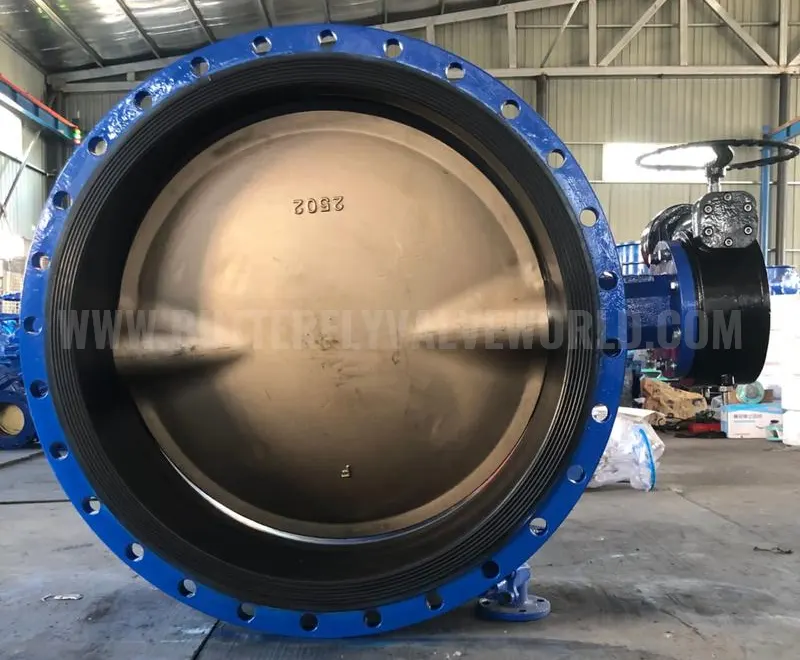
In the past, aluminum bronze butterfly valves were the mainstream choice in the seawater desalination field. However, under the harsh operating conditions of seawater desalination—such as high chlorine content, high flow rate, and frequent opening and closing—their shortcomings have become increasingly apparent. These shortcomings include short service life, troublesome maintenance, and easy seal failure. Zhengzhou Jinggong's bidirectional metal-sealed rotary ball valve is a product specifically designed for seawater desalination conditions. With a service life of up to 5 years and lower total life cycle cost, it has now become the preferred product to replace aluminum bronze butterfly valves. This product can perfectly adapt to the entire seawater desalination process, including water intake, pretreatment, high-pressure membrane modules, and concentrate discharge.
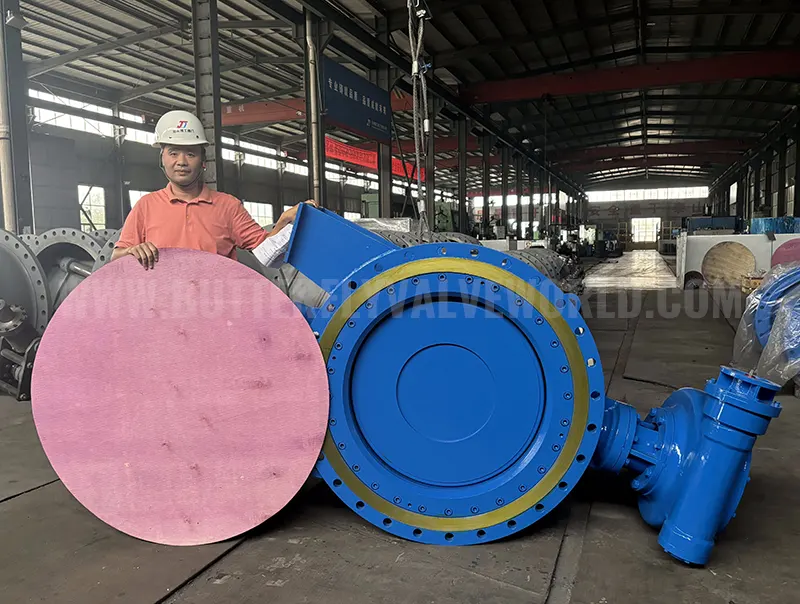
In reality, seawater desalination puts immense strain on valves. The raw water contains 3.5% chloride ions, along with sediment and marine spores. In the concentrate stage, salinity rises to 7%. Furthermore, there is high pressure, pressure fluctuations, and erosion; ordinary valves simply cannot withstand such conditions.
While aluminum bronze butterfly valves can offer some resistance to seawater corrosion and prevent marine organism attachment to a certain extent, they have three fatal flaws. First, their service life is too short. Under normal use, their lifespan is only 1-2 years. In high-pressure, high-flow-rate environments, seal wear and valve plate pitting may occur within 18 months, requiring frequent replacement. Second, maintenance costs are high. The valve seat is prone to aging, and leakage is common in the shaft area. Annual costs for maintenance and seal replacement are substantial. More importantly, downtime for maintenance results in water production loss, making it counterproductive. Third, performance is insufficient. Their bidirectional sealing capability is inadequate, making them prone to leakage under negative and back pressure conditions, and they cannot meet core requirements such as ERD quick-closing and membrane module protection.
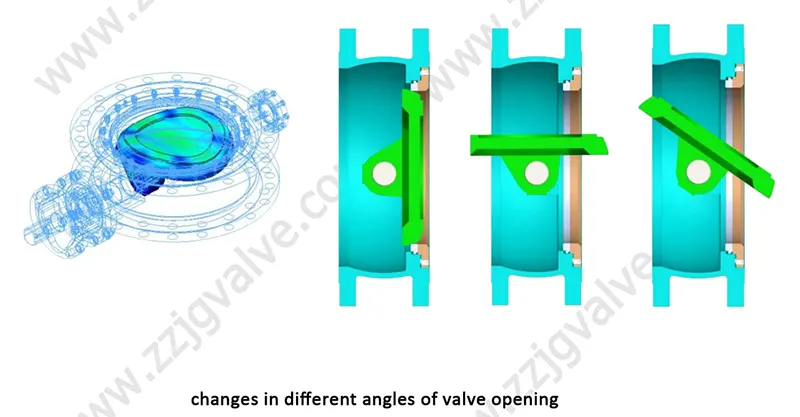
Zhengzhou Jinggong's bidirectional metal-sealed rotary ball valve effectively solves these problems. It combines the lightweight structure of a butterfly valve with the bidirectional sealing advantages of a ball valve, making it ideal for all scenarios in seawater desalination. This product employs a double-eccentric spherical sealing structure, with the sealing surface treated by plasma spraying and hard alloy welding, resulting in excellent bidirectional zero-leakage performance. Whether under forward or reverse pressure, it achieves Class VI sealing, completely eliminating backflow leakage.
Furthermore, the valve core has an adaptive centering function and automatically compensates for wear. It operates without friction during opening and closing, exhibiting strong resistance to high-velocity erosion and effectively resisting pitting and crevice corrosion caused by chloride ions. Its stable service life can reach 5 years, approximately 2-3 times that of an aluminum bronze butterfly valve, making it very worry-free to use.
In addition, this rotary ball valve has a lower flow resistance coefficient. Taking a DN1000 diameter as an example, its flow resistance is only 0.29, which can help reduce system energy consumption by 3%-5%, perfectly meeting the current energy-saving requirements of the seawater desalination industry. More practically, the valve plate features a built-in shearing and scraping function, automatically removing marine organisms and sediment, eliminating the need for additional manual cleaning and significantly reducing maintenance workload.
This product complies with relevant domestic and international standards such as API 609, AWWA C504, and GB/T 12238, and can also be made of 2205/2507 duplex steel. Its PREN value fully meets the corrosion resistance standards for seawater desalination, making it easily adaptable to both atmospheric pressure water intake scenarios and 8.5MPa high-pressure membrane module scenarios.
Some may feel that the initial purchase price of a rotary ball valve is slightly higher than that of an aluminum bronze butterfly valve, but when calculating the total cost over five years, the advantages of the rotary ball valve are very significant from a total life cycle cost (TCO) perspective.
First, consider the purchase cost: although the initial purchase price of a rotary ball valve is slightly higher, it can be used for 5 years without needing complete replacement; while an aluminum bronze butterfly valve needs to be replaced every 1-2 years, and repeated purchases are actually more expensive. Secondly, consider maintenance costs: The annual maintenance and spare parts costs for aluminum bronze butterfly valves are approximately 20% of their purchase price. Over five years, these costs exceed the initial purchase price. In contrast, the rotary ball valve features a maintenance-free design, with annual maintenance costs less than 5% of the purchase price, resulting in significant savings.
There's also the issue of downtime losses: Aluminum bronze butterfly valves require replacement every 1-2 years, with single downtime causing water production losses of tens of thousands of yuan. The rotary ball valve, however, can operate stably for 5 years without unplanned downtime, directly avoiding these losses. In summary, over a five-year period, the total operating cost of the rotary ball valve is 30%-40% lower than that of the aluminum bronze butterfly valve. In the long run, its cost-effectiveness far surpasses that of the traditional aluminum bronze butterfly valve.
Zhengzhou Jinggong has been deeply involved in the valve manufacturing industry for over 30 years. This bidirectional metal-sealed rotary ball valve has passed ISO quality system certification and TS special equipment manufacturing license, and is widely used in numerous seawater desalination projects both domestically and internationally. It covers a full range of diameters from DN40 to DN3600 and is compatible with all pressure ratings from PN6 to PN40.
Whether it's preventing marine organism attachment in the intake section, high-frequency backwashing in the pretreatment section, emergency shut-off of the high-pressure membrane module, or erosion resistance in concentrate discharge, this rotary ball valve performs reliably and can completely replace traditional aluminum bronze butterfly valves.
Currently, the localization of seawater desalination is accelerating, and cost reduction and efficiency improvement have become core industry demands. Choosing Zhengzhou Jinggong's bidirectional metal-sealed rotary ball valve means choosing a long-life, low-energy-consumption, zero-failure, and cost-effective fluid control solution. We will use our professional technology and reliable products to help seawater desalination plants reduce operation and maintenance costs, improve operational stability, and provide solid valve support for global water resource security.
In the past, aluminum bronze butterfly valves were the mainstream choice in the seawater desalination field. However, under the harsh operating conditions of seawater desalination—such as high chlorine content, high flow rate, and frequent opening and closing—their shortcomings have become increasingly apparent. These shortcomings include short service life, troublesome maintenance, and easy seal failure. Zhengzhou Jinggong's bidirectional metal-sealed rotary ball valve is a product specifically designed for seawater desalination conditions. With a service life of up to 5 years and lower total life cycle cost, it has now become the preferred product to replace aluminum bronze butterfly valves. This product can perfectly adapt to the entire seawater desalination process, including water intake, pretreatment, high-pressure membrane modules, and concentrate discharge.
In reality, seawater desalination puts immense strain on valves. The raw water contains 3.5% chloride ions, along with sediment and marine spores. In the concentrate stage, salinity rises to 7%. Furthermore, there is high pressure, pressure fluctuations, and erosion; ordinary valves simply cannot withstand such conditions.
While aluminum bronze butterfly valves can offer some resistance to seawater corrosion and prevent marine organism attachment to a certain extent, they have three fatal flaws. First, their service life is too short. Under normal use, their lifespan is only 1-2 years. In high-pressure, high-flow-rate environments, seal wear and valve plate pitting may occur within 18 months, requiring frequent replacement. Second, maintenance costs are high. The valve seat is prone to aging, and leakage is common in the shaft area. Annual costs for maintenance and seal replacement are substantial. More importantly, downtime for maintenance results in water production loss, making it counterproductive. Third, performance is insufficient. Their bidirectional sealing capability is inadequate, making them prone to leakage under negative and back pressure conditions, and they cannot meet core requirements such as ERD quick-closing and membrane module protection.
Zhengzhou Jinggong's bidirectional metal-sealed rotary ball valve effectively solves these problems. It combines the lightweight structure of a butterfly valve with the bidirectional sealing advantages of a ball valve, making it ideal for all scenarios in seawater desalination. This product employs a double-eccentric spherical sealing structure, with the sealing surface treated by plasma spraying and hard alloy welding, resulting in excellent bidirectional zero-leakage performance. Whether under forward or reverse pressure, it achieves Class VI sealing, completely eliminating backflow leakage.
Furthermore, the valve core has an adaptive centering function and automatically compensates for wear. It operates without friction during opening and closing, exhibiting strong resistance to high-velocity erosion and effectively resisting pitting and crevice corrosion caused by chloride ions. Its stable service life can reach 5 years, approximately 2-3 times that of an aluminum bronze butterfly valve, making it very worry-free to use.
In addition, this rotary ball valve has a lower flow resistance coefficient. Taking a DN1000 diameter as an example, its flow resistance is only 0.29, which can help reduce system energy consumption by 3%-5%, perfectly meeting the current energy-saving requirements of the seawater desalination industry. More practically, the valve plate features a built-in shearing and scraping function, automatically removing marine organisms and sediment, eliminating the need for additional manual cleaning and significantly reducing maintenance workload.
This product complies with relevant domestic and international standards such as API 609, AWWA C504, and GB/T 12238, and can also be made of 2205/2507 duplex steel. Its PREN value fully meets the corrosion resistance standards for seawater desalination, making it easily adaptable to both atmospheric pressure water intake scenarios and 8.5MPa high-pressure membrane module scenarios.
Some may feel that the initial purchase price of a rotary ball valve is slightly higher than that of an aluminum bronze butterfly valve, but when calculating the total cost over five years, the advantages of the rotary ball valve are very significant from a total life cycle cost (TCO) perspective.
First, consider the purchase cost: although the initial purchase price of a rotary ball valve is slightly higher, it can be used for 5 years without needing complete replacement; while an aluminum bronze butterfly valve needs to be replaced every 1-2 years, and repeated purchases are actually more expensive. Secondly, consider maintenance costs: The annual maintenance and spare parts costs for aluminum bronze butterfly valves are approximately 20% of their purchase price. Over five years, these costs exceed the initial purchase price. In contrast, the rotary ball valve features a maintenance-free design, with annual maintenance costs less than 5% of the purchase price, resulting in significant savings.
There's also the issue of downtime losses: Aluminum bronze butterfly valves require replacement every 1-2 years, with single downtime causing water production losses of tens of thousands of yuan. The rotary ball valve, however, can operate stably for 5 years without unplanned downtime, directly avoiding these losses. In summary, over a five-year period, the total operating cost of the rotary ball valve is 30%-40% lower than that of the aluminum bronze butterfly valve. In the long run, its cost-effectiveness far surpasses that of the traditional aluminum bronze butterfly valve.
Zhengzhou Jinggong has been deeply involved in the valve manufacturing industry for over 30 years. This bidirectional metal-sealed rotary ball valve has passed ISO quality system certification and TS special equipment manufacturing license, and is widely used in numerous seawater desalination projects both domestically and internationally. It covers a full range of diameters from DN40 to DN3600 and is compatible with all pressure ratings from PN6 to PN40.
Whether it's preventing marine organism attachment in the intake section, high-frequency backwashing in the pretreatment section, emergency shut-off of the high-pressure membrane module, or erosion resistance in concentrate discharge, this rotary ball valve performs reliably and can completely replace traditional aluminum bronze butterfly valves.
Currently, the localization of seawater desalination is accelerating, and cost reduction and efficiency improvement have become core industry demands. Choosing Zhengzhou Jinggong's bidirectional metal-sealed rotary ball valve means choosing a long-life, low-energy-consumption, zero-failure, and cost-effective fluid control solution. We will use our professional technology and reliable products to help seawater desalination plants reduce operation and maintenance costs, improve operational stability, and provide solid valve support for global water resource security.
Get in Touch With Us
Email: [email protected]
Mobiler/Whatsapp:+86-18135671959